青山・表参道のカイロプラクティックオフィス|港区南青山の【東京カイロプラクティック】|腰痛、肩こり、ムチウチ、頭痛に

青山・表参道のカイロプラクティックオフィス|港区南青山の【東京カイロプラクティック】|腰痛、肩こり、ムチウチ、頭痛に
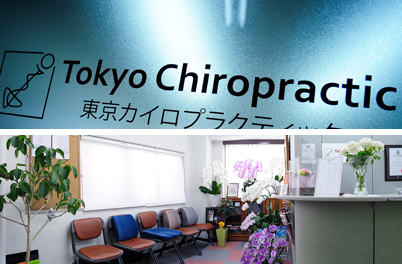 Tokyo Chiropractic is located in Aoyama, one of Tokyo's trendiest business districts and is near Aoyama street (route 246) lined with designer boutiques and famous restaurants. It is only a four minute walk from Omotesando station. Omotesando station has easy access to major railway stations, Shibuya, Harajuku, Ebisu, Tameikesanno and Roppongi. A third generation chiropractor, Kei Takeyachi opened the clinic with his father Nobuyoshi in 2011.
Originally Yoneo Takeyachi who was one of early Japanese chiropractors established Tokyo Chiropractic Research Office in Aoyama, Minato-ku, Tokyo in 1949. Later in 1977 Yoneo's three sons, Hiroaki, Kazuyoshi and Nobuyoshi who all graduated from National College of Chiropractic,USA (current National University of Health Sciences) reopened as Tokyo Chiropractic Center adjoining a medical clinic (Takeyachi Clinic) which had an X-ray facility within the place. In 2011 Tokyo Chiropractic opened in the vicinity as the successor to Tokyo Chiropractic Center, which is a certified office by the Japanese Association of Chiropractors (JAC), a national member of the World Federation of Chiropractic (WFC) affiliated with the World Health Organization (WHO). People from about 90 countries have visited Tokyo Chiropractic until today.
Chiropractic (comes from the Greek word meaning "treatment by hand") is a natural healing health care with spinal manipulation (or adjustment) to improve nerve function and restore general health in a surgery-free, drugless environment. As the nervous system consisting of the brain, the spinal cord, and the nerve roots, controls every function of the human body, chiropractors primarily focus on the spine that protects the nervous system. Chiropractic was first introduced in 1895 by D.D. Palmer in the US and was brought into Japan by Saburo Kawaguchi in 1916. In 2005, World Health Organization (WHO) published the official guidelines on basic training and safety in chiropractic, and the practice of chiropractic is regulated by law in 50 countries such as the USA, Canada, Australia, New Zealand, the UK, Switzerland, etc. The objective of chiropractic treatment is to relieve nerve interference and emphasize the inherent recuperative power of the body to heal itself by correcting misalignment of the spine and other joints. As a result, treatment helps many conditions including musculoskeletal symptoms.
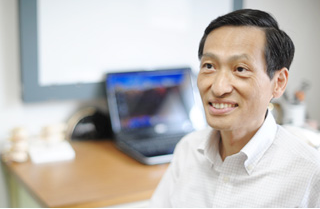
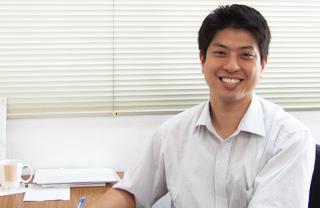 Dr. Kei Takeyachi
At your initial visit, it takes about 45 minutes for performing examinations (postural exam, neurological exam, orthopedic exam, physical exam etc.) and chiropractic treatment. Along with the treatment home exercises to improve your body function are advised. If necessary we ask you to take X-ray or MRI at your local hospital or clinic before starting chiropractic treatment. From the second visit it tales about 20 minutes. People living in a big city like Tokyo are under stress and suffer from various musculoskeletal problems due to office work and manual work. Chiropractic treatment helps you achieve optimum health by improving your natural healing ability. If you need to rest your body after chiropractic care, you can use a relaxation chair in our clinic.
Low Back Pain, Acute and Chronic Back Pain, Headache , Stiff Neck, Whiplash Injury, Shoulder Stiffness and Pain, Spinal Curvature, Sciatica, Hip and Knee Pain, Thoracic Pain, Prenatal and Postpartum Care, Fatigue, Female Problems, Gastrointestinal Problems, Sports Injuries, Autonomic Imbalance, Postural Problems, Rehabilitation and Health Maintenance.
Cancer/Tumour, Infectious and contagious disease, Fractures/ Dislocation of bones, Blood related disease (clotting disorder) etc.
English Brochure PDF
If you are interested in more professional information, visit
Japanese Association of Chiropractors (JAC)
https://jac-chiro.org/en/home/
If you are searching for registered chiropractors in Japan, visit
Japan Chiropractic Register (JCR)
https://chiroreg.jp/english/
If you are interested in more research and evidence-based information, visit
Japanese Soceity of Chiropractic Science (JSCS)
https://www.chiropractic.or.jp/english/
Tokyo Chiropractic has medical partnerships with the following clinics for referrals.
Tokyo Medical and Surgical Clinic Tel: 03-3436-5024
(5 min walk from Onarimon station and 6 min walk from Akabanebashi station)
https://tmsc.jp
NAG Orthopaedic Clinic Tel: 03-6432-5880
(5 min walk from Shirokanedai station)
https://nagseikei.jp
#101 FOLIAGE Minami Aoyama,
4-20-4 Minami Aoyama, Minato-ku,
Tokyo 107-0062, Japan
*Entrance is on the left side of the building
Phone: 03-3478-2713
Fax: 03-3478-2714
E-mail: info@tokyochiro.com
■ Ginza Line, Hanzomon Line and Chiyoda Line
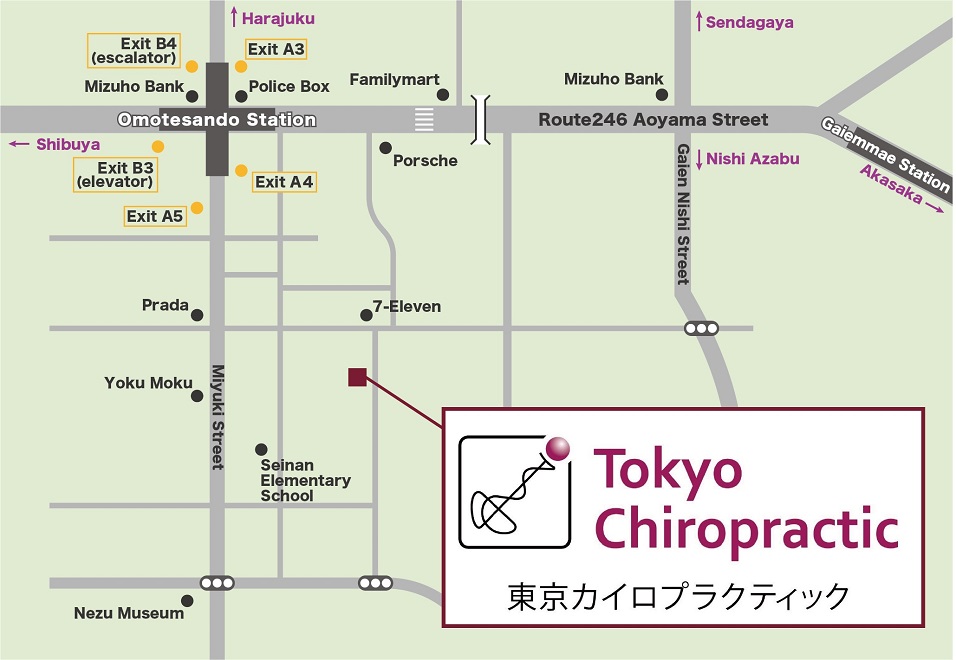
5 minutes' walk from Omotesando station (Exit A4)
*escalator for Exit B4 and elevator for Exit B3
■ Parking
3-5 minutes' walk from toll car parks; Mitsui Repark Minami Aoyama 3 chome dai 7, Minami Aoyama FROM 1st and Minami Aoyama 5 chome Parking lot.
☆ Directions from Omotesando station
■ Local Buses
5-7 minutes walk from Kita Aoyama 3-chome and Omotesando station stops of Chii Bus and Hachiko Bus.
| Fees (Child under 16 years old) |
Adult | Child | |
|---|---|---|---|
| First Visit | 12,000 yen |
10,000 yen |
|
| Subsequent Visit | 7,000 yen |
5,000 yen |
|
| Five-session Ticket | 33,000 yen | ||
| Patient Report | 2,000 yen *For overseas health insurances | ||
| Office Hours | Monday to Saturday 10:00 a.m.-7:00 p.m. |
||
| Closed | Sunday and Public Holidays | ||
| *Advance booking for treatment is necessary. *All prices are tax included. *First Visit Fee includes assessment and treatment. *First Visit Fee applies if the interval is more than two years since your last visit. *The Five Session Ticket: - You can purchase the ticket after five sessions. - It is only usable by the person who purchased. - It is valid for six months from the date of issue. - It is non-refundable. *We accept credit card payments. *Please call us if you are coming late for your appointment. |
|||


Copyright 2011 Tokyo Chiropractic All rights reserved.